
How to use the Android MCP SMS Server in OpenWebUI
This guide explains how to connect the Ozeki Android SMS Gateway MCP server to OpenWebUI, enabling the AI assistant to send SMS messages directly from your Android phone. By following this tutorial, you will learn how to install the Ozeki Android SMS Gateway app, enable its built-in MCP server, register the MCP endpoint in OpenWebUI, and verify that everything is working by sending a test message.
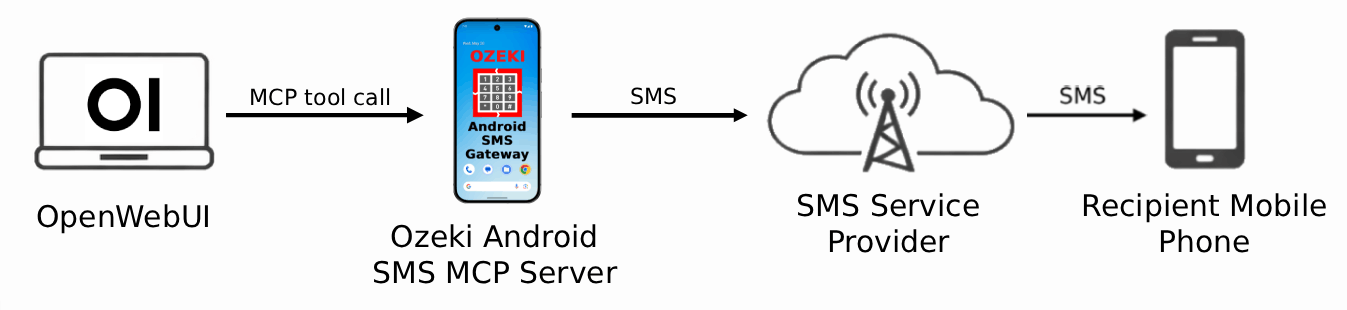
Solution: How to send SMS from OpenWebUI
OpenWebUI is connected to the Ozeki Android SMS MCP Server through the MCP protocol, where OpenWebUI is the MCP client and the Android phone is the MCP server. The Android phone is connected to the SMS service provider through a wireless mobile network connection. When an SMS is sent, it first travels from OpenWebUI to the Android phone through the MCP protocol, and the Android phone forwards it to the SMS service provider, which delivers it to the recipient's mobile phone.
What is OpenWebUI?
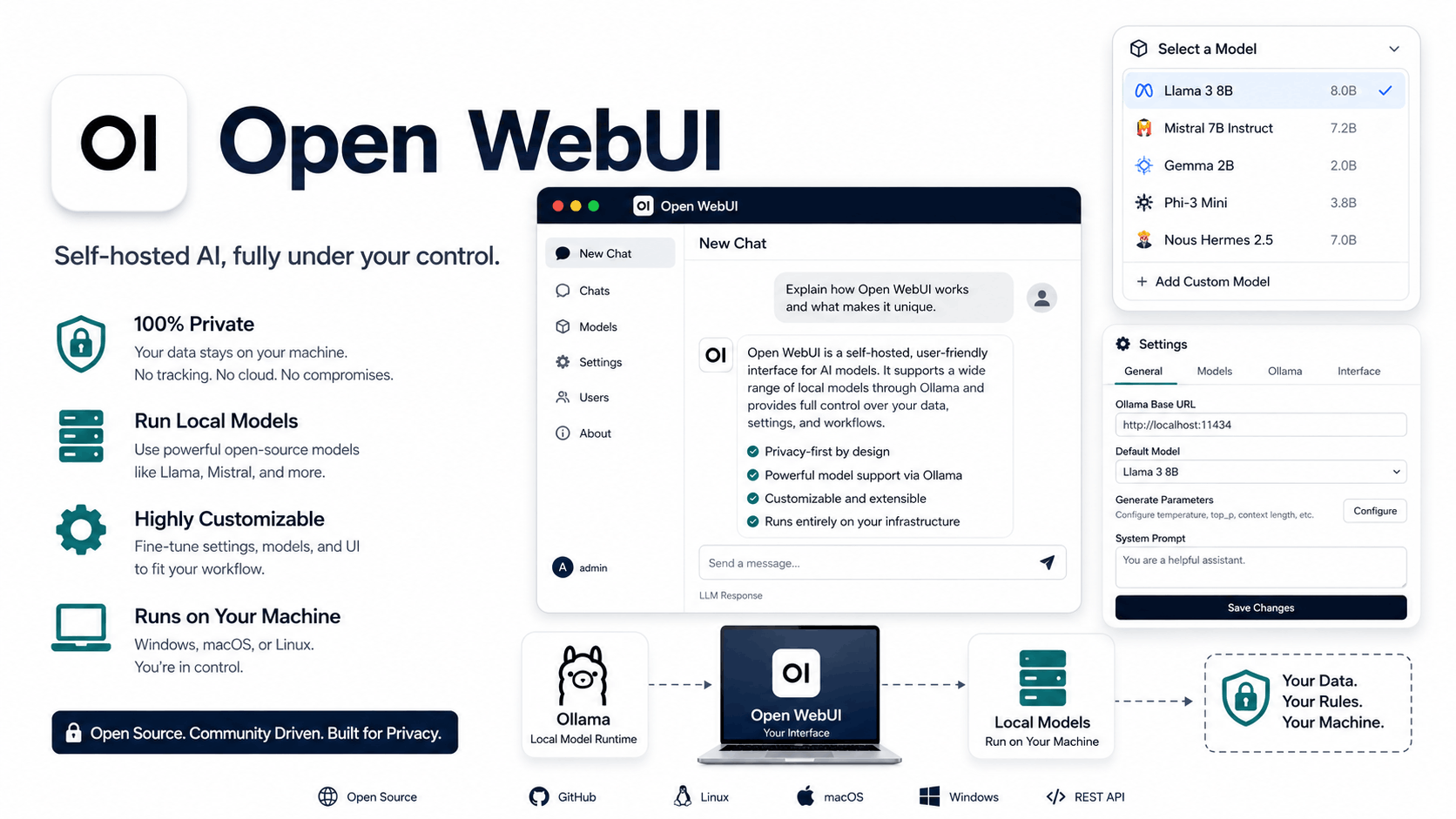
OpenWebUI is an extensible, feature-rich, and user-friendly self-hosted web interface designed to work with various LLM providers. It offers a modern chat interface that supports multiple AI models, conversation history, user management, and API integrations.
What is an Android SMS MCP Server?
An Android SMS MCP Server is a Model Context Protocol server that runs directly on an Android smartphone and exposes SMS functionality — such as sending text messages and querying SIM subscriptions — as structured tools that any MCP-compatible AI client can call. Once installed and configured, the AI client can send real SMS messages through the phone's SIM card to any phone number, with a single tool call.
Download Ozeki Android SMS Gateway
To use this solution you need to install the Android app on your Android phone.
Download the android app: Android SMS Gateway
https://android-sms-gateway.com/p_51-download-android-sms-gateway.html
Steps to follow
You will need OpenWebUI installed on your system. If you have not set it up yet, follow our OpenWebUI installation guide.
- Install Ozeki Android SMS Gateway
- Enable MCP SMS Server
- OpenWebUI SMS MCP Server Config
- Add the SMS MCP Server config to OpenWebUI
- Send a test SMS
- Check the SMS in the SMS Gateway logs
Step 1 - Install Ozeki Android SMS Gateway
For a full tutorial on installing the Ozeki Android SMS Gateway, check out our How to install Android SMS Client and Enable Ozeki SMS Client permissions guides.
Before you can use the MCP SMS Server, you need to install the Ozeki SMS Client on your Android device. The app will serve as the local SMS gateway that OpenWebUI connects to over your Wi-Fi network. Make sure both devices are on the same local network, as this is required for the HTTP connection to work.
Step 2 - Enable MCP SMS Server
For a full tutorial on enabling the MCP server in the Android app, check out our Android MCP SMS Server configuration guide.
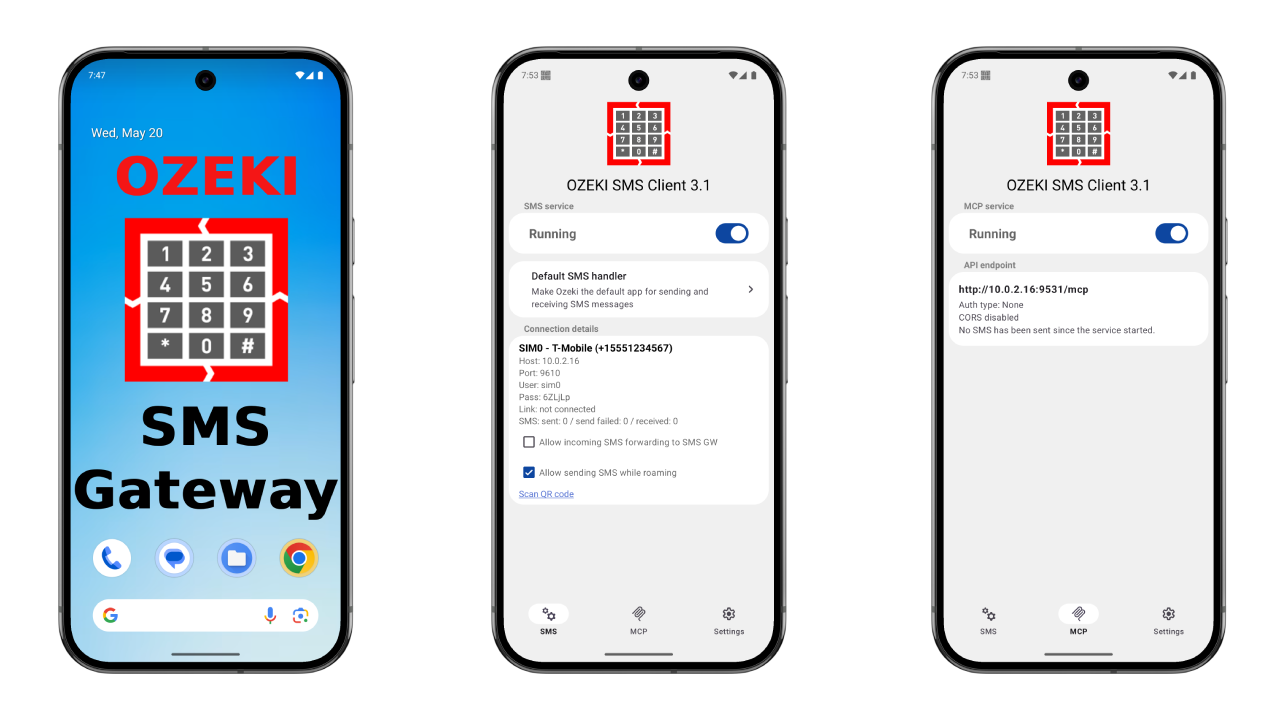
Open the Ozeki SMS Client app on your Android device and tap the MCP tab in the bottom navigation bar. Tap the toggle switch to start the MCP server and grant any permission requests that appear, including access to SMS messages. The toggle will switch from "Stopped" to "Running" and the API endpoint URL will appear below. Copy this URL, as you will need it when configuring OpenWebUI in the next step.
Step 3 - OpenWebUI SMS MCP Server Config
Type: Streamable HTTP
Name: Ozeki SMS MCP server
URL: http://{address}:9531/mcp
Example prompt
Send an SMS to +36301111111, the message should be "Hello from OpenWebUI".
Step 4 - Add the SMS MCP Server config to OpenWebUI
The following video shows how to add the Android SMS MCP server to Open WebUI step-by-step.
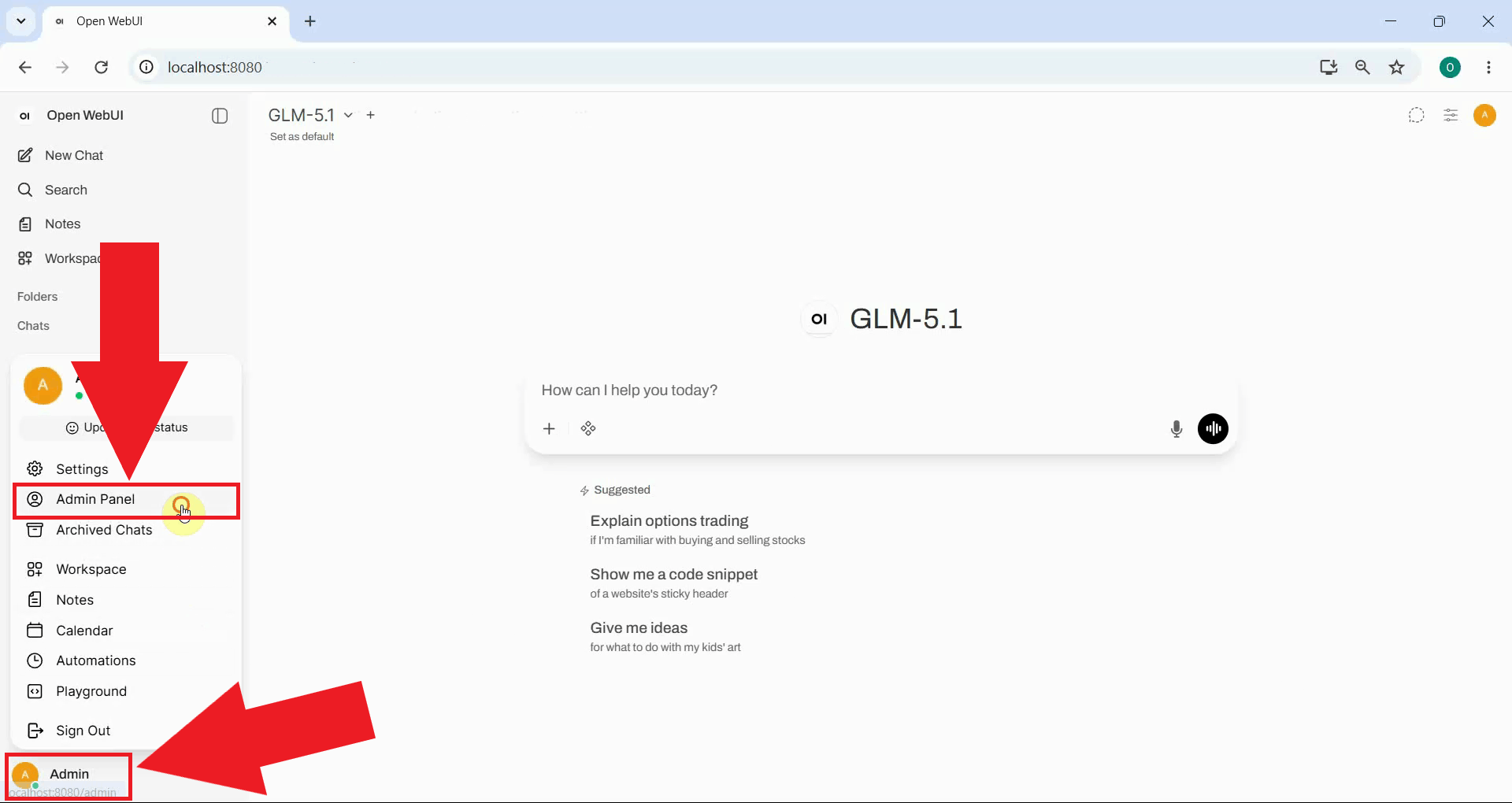
Open OpenWebUI in your browser and navigate to the Admin Panel by clicking your profile name in the bottom left corner and selecting Admin Panel. This is where all server-level configuration is managed, including MCP tool server integrations (Figure 1).
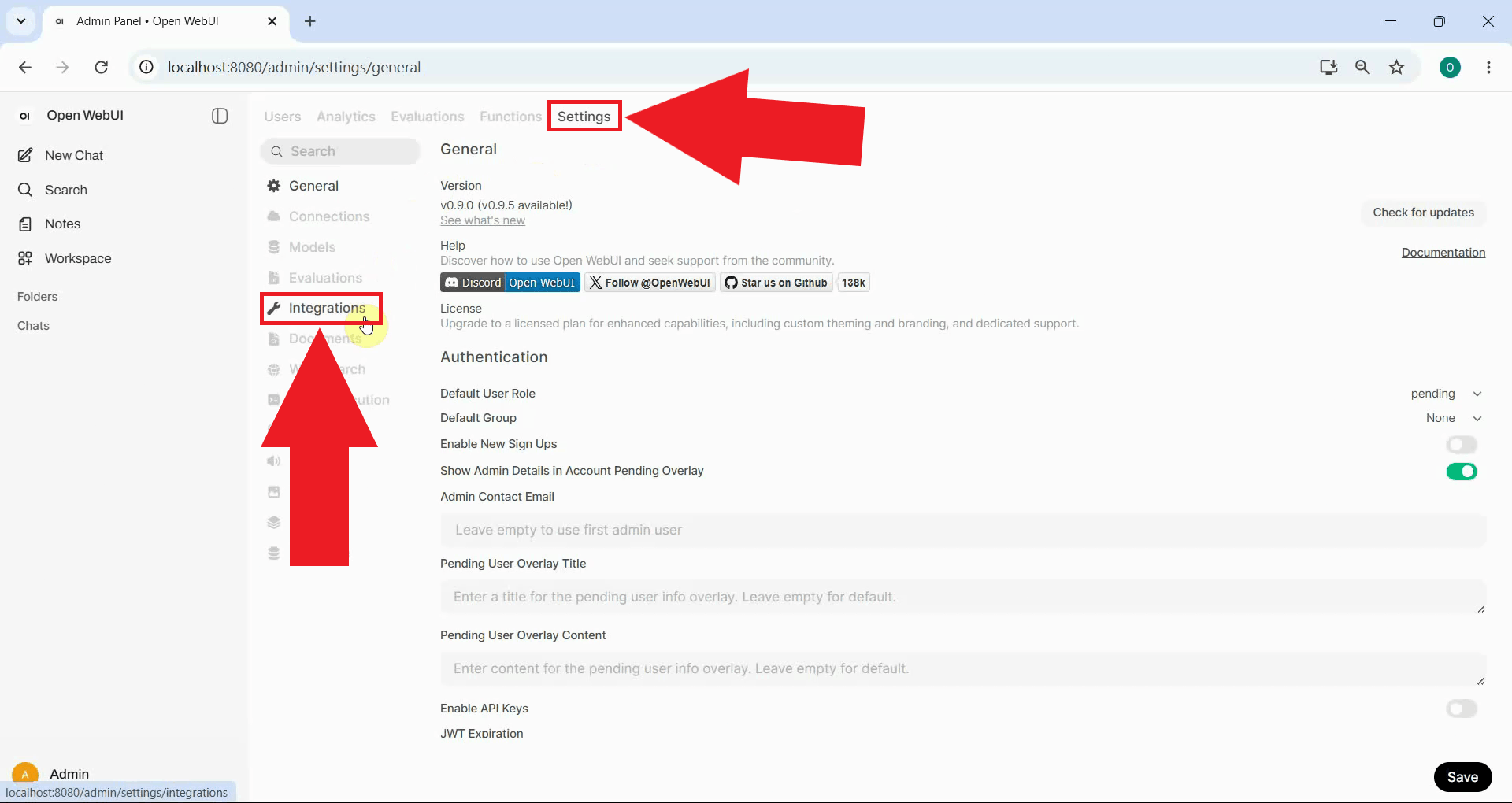
Navigate to the Settings section and select Integrations from the left-hand menu. This section lists all external tool servers that OpenWebUI is configured to connect to (Figure 2).
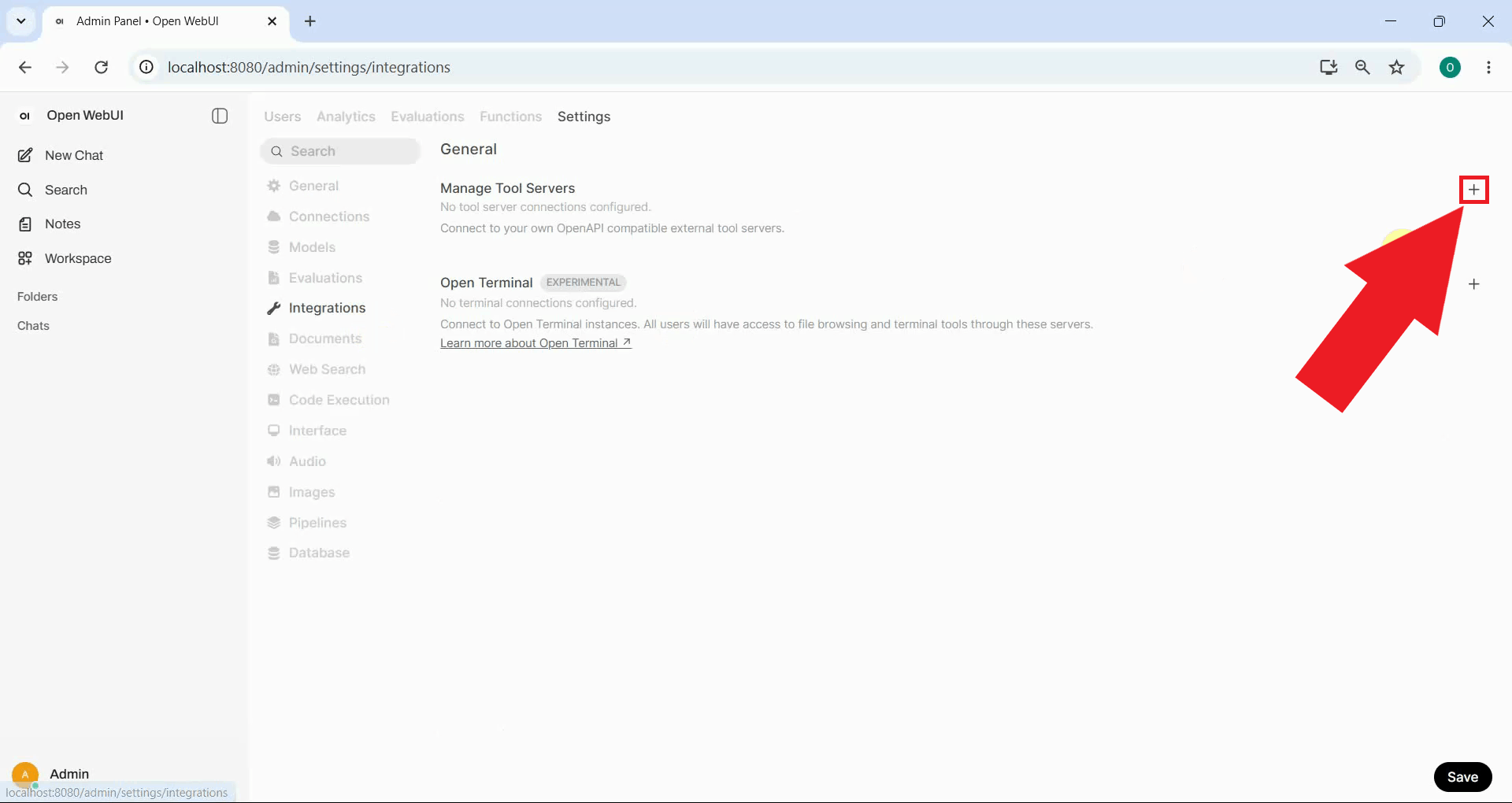
Click the Add Tool Server button to open the new server registration form (Figure 3).
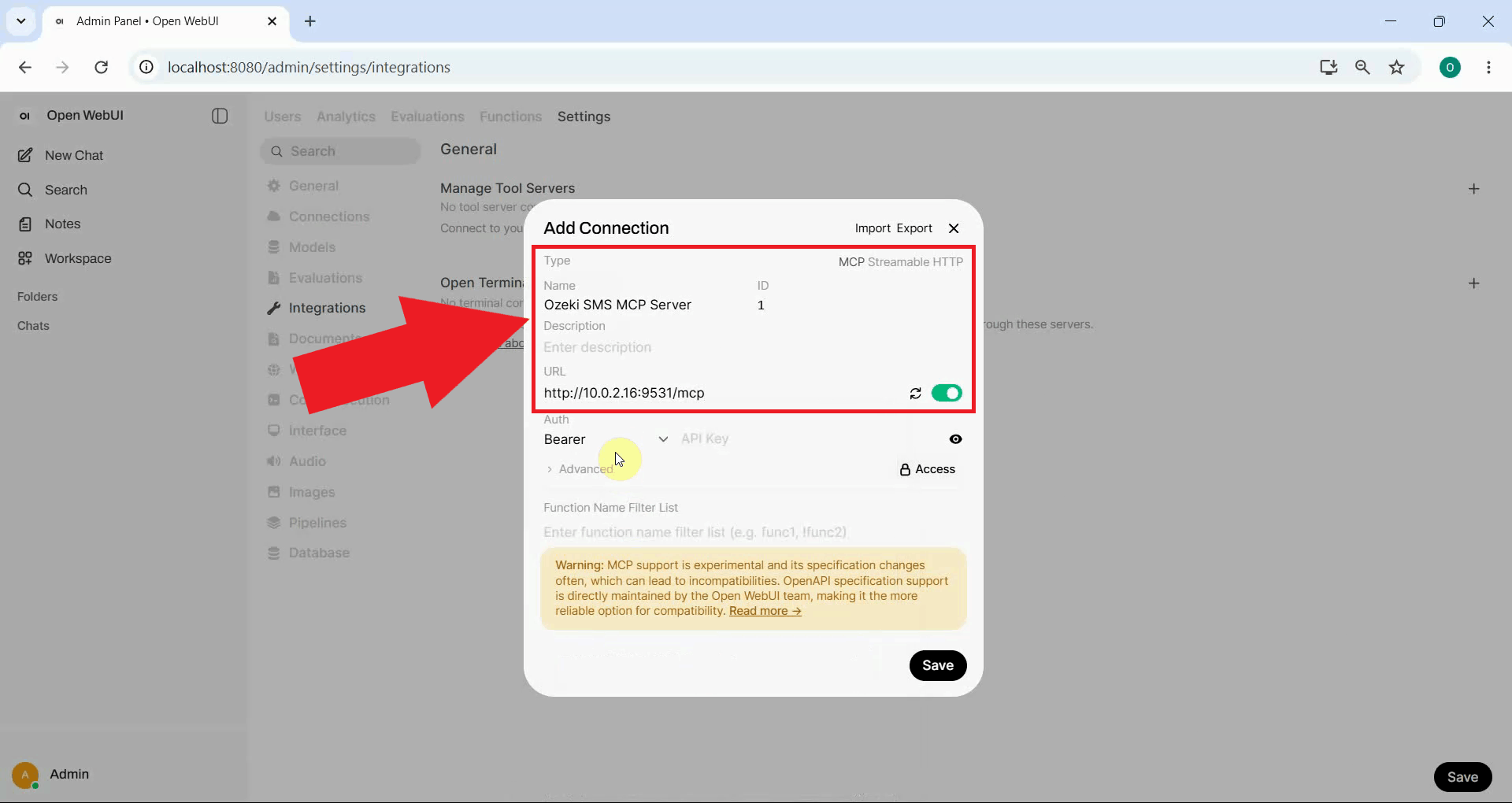
Fill in the MCP server details in the registration form. Set the Type to Streamable HTTP, enter a descriptive Name such as Ozeki SMS MCP server, and set the URL to the endpoint shown in the Ozeki SMS Client app on your Android device (Figure 4).
Type: Streamable HTTP
Name: Ozeki SMS MCP server
URL: http://{address}:9531/mcp
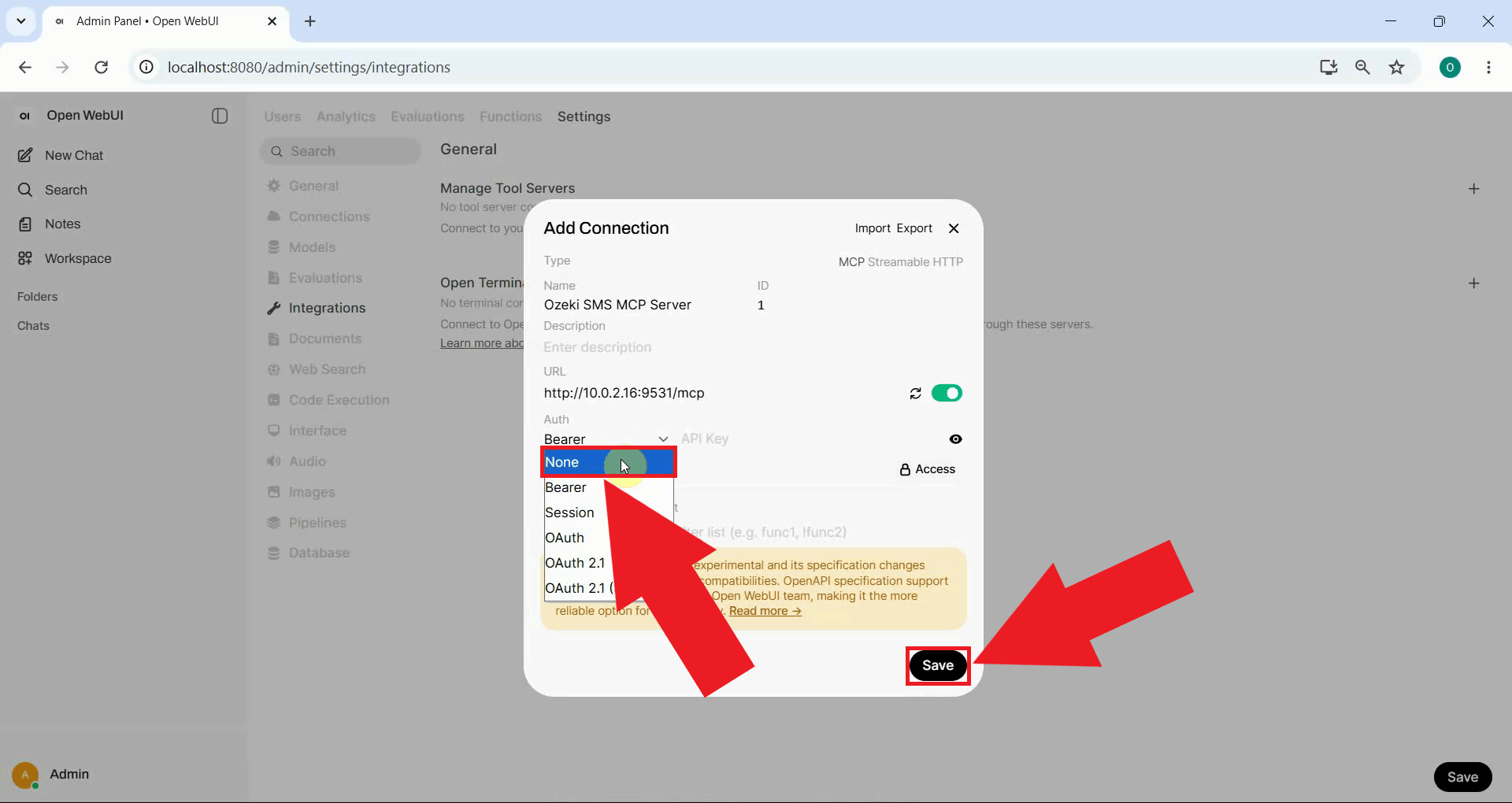
Set the authentication option to None (or the authentication type you set in the android app), then click Save to register the server (Figure 5).
Step 5 - Send a test SMS
The following video shows how to send an SMS message from Open WebUI using the Ozeki Android SMS MCP server step-by-step.
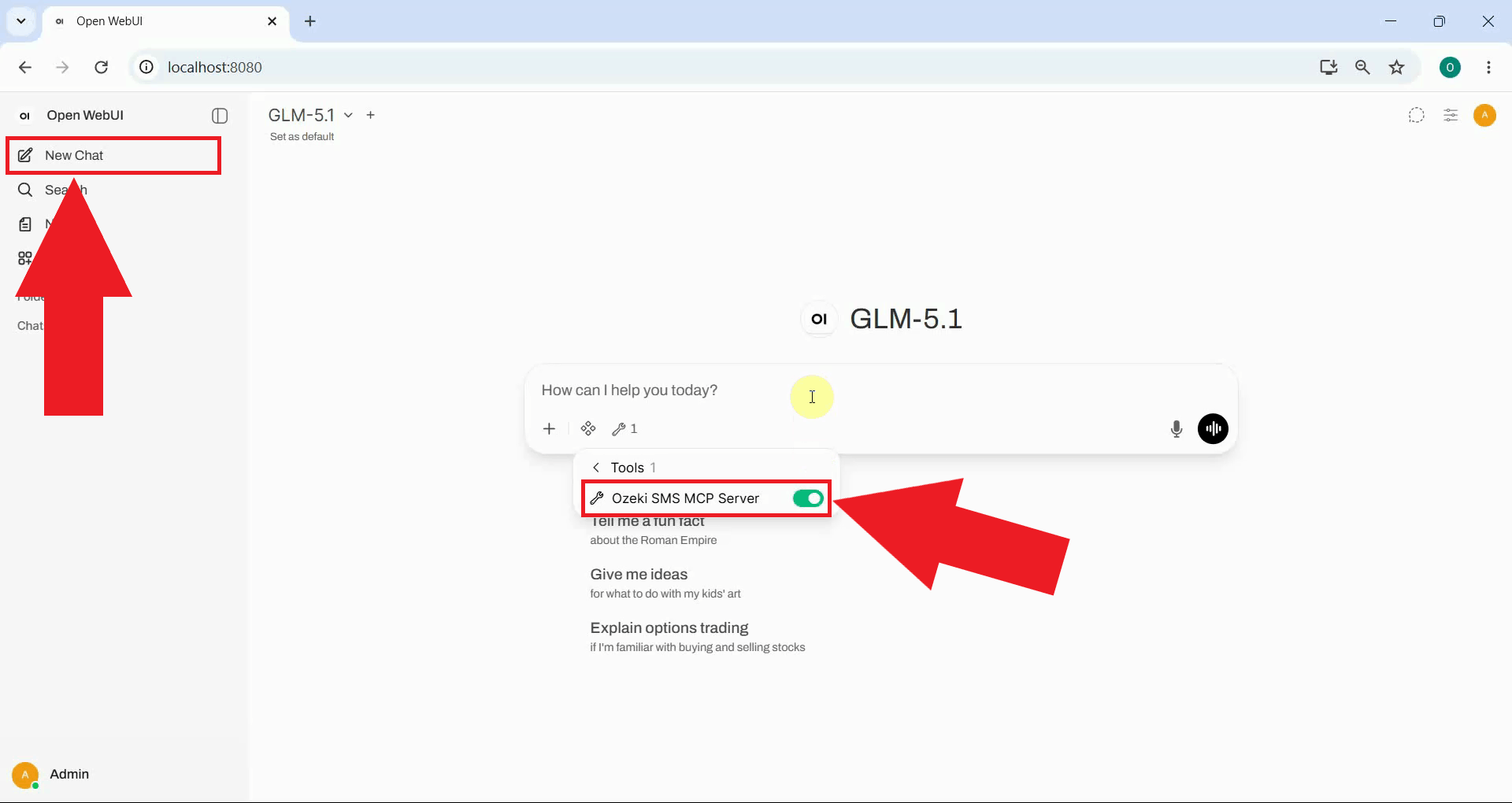
Start a new chat in OpenWebUI and enable the SMS MCP tool by clicking the Tools icon in the chat toolbar. Select the Ozeki SMS MCP server from the list to make its tools available for the current conversation (Figure 6).
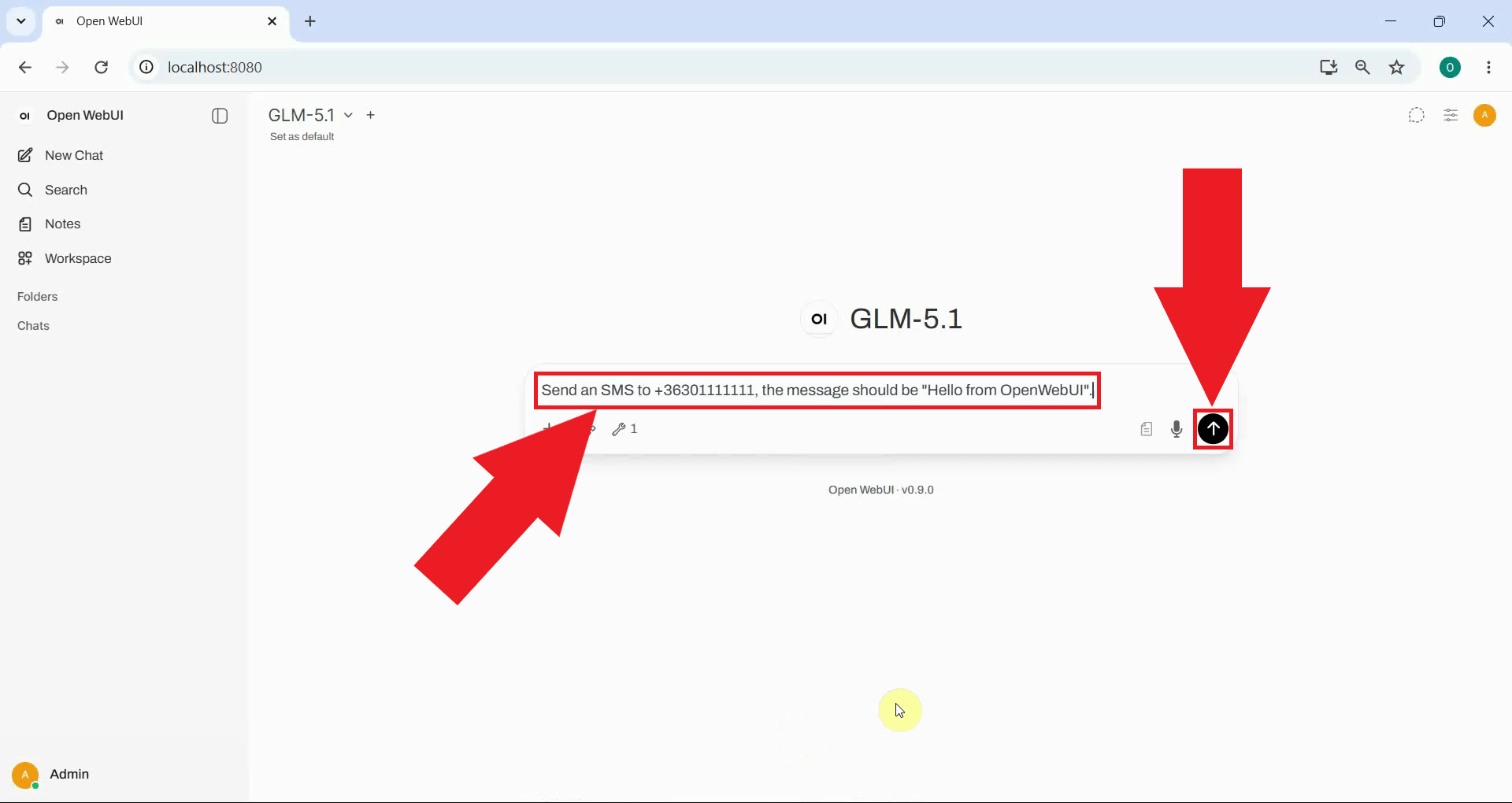
Type a plain language instruction in the chat prompt asking the AI to send an SMS to a specific phone number. OpenWebUI will call the Send SMS tool and process the request (Figure 7).
Send an SMS to +36301111111, the message should be "Hello from OpenWebUI".
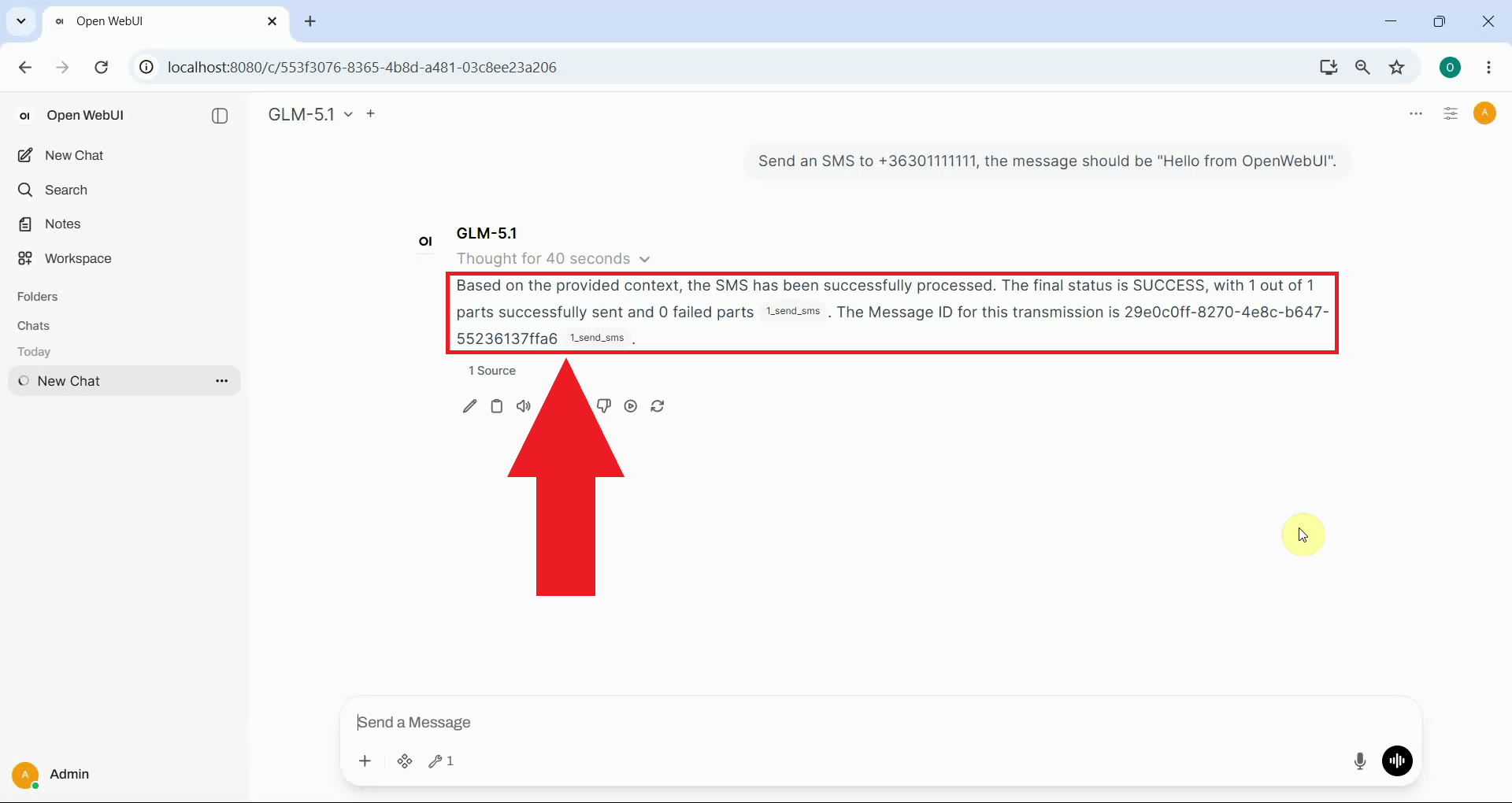
You will see the AI response in the chat window. A successful response confirms that the message has been passed to the Android gateway and queued for delivery (Figure 8).
Step 6 - Check the SMS in the SMS Gateway logs
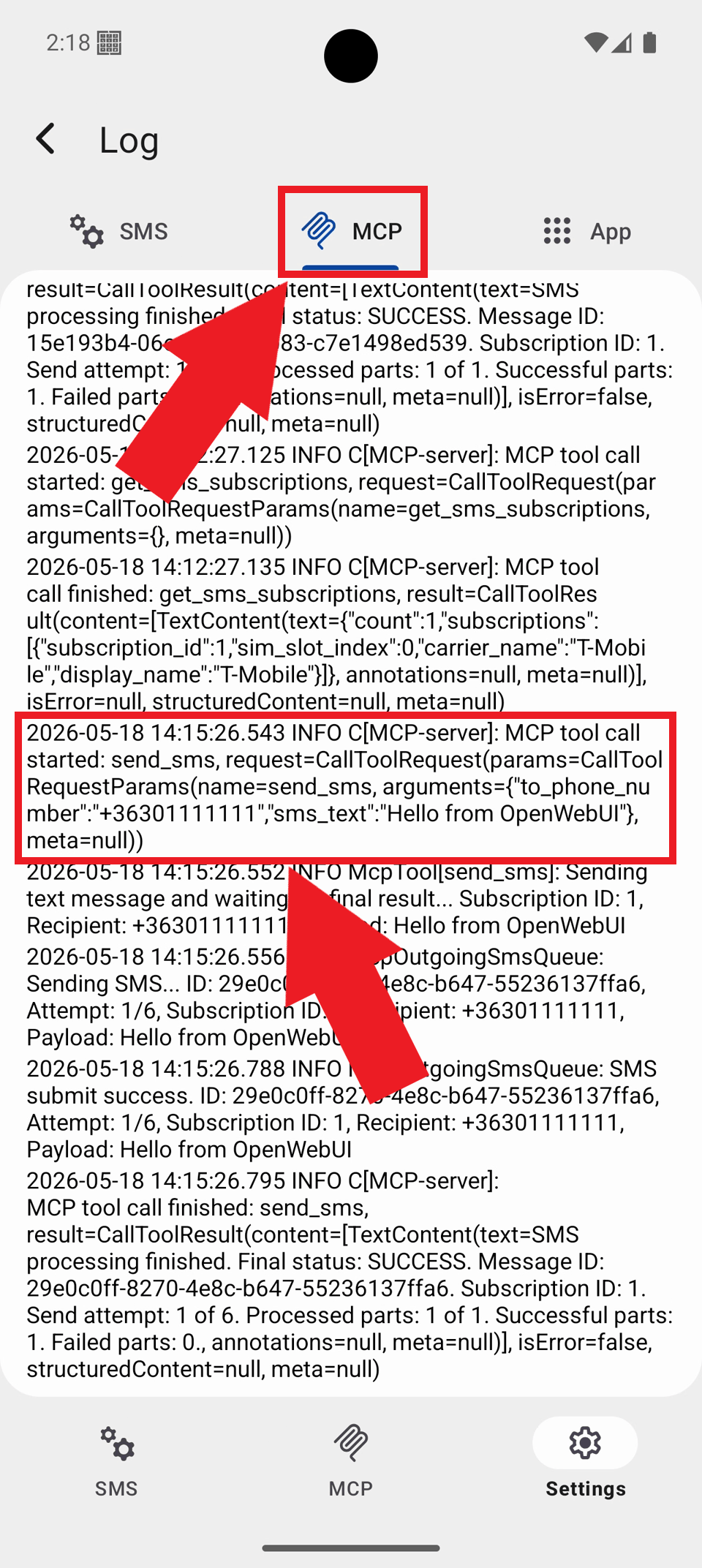
The following video shows how to check the gateway logs in the Ozeki SMS Client app step-by-step. This allows you to confirm that the SMS request from OpenWebUI was received and processed successfully by the Android gateway.
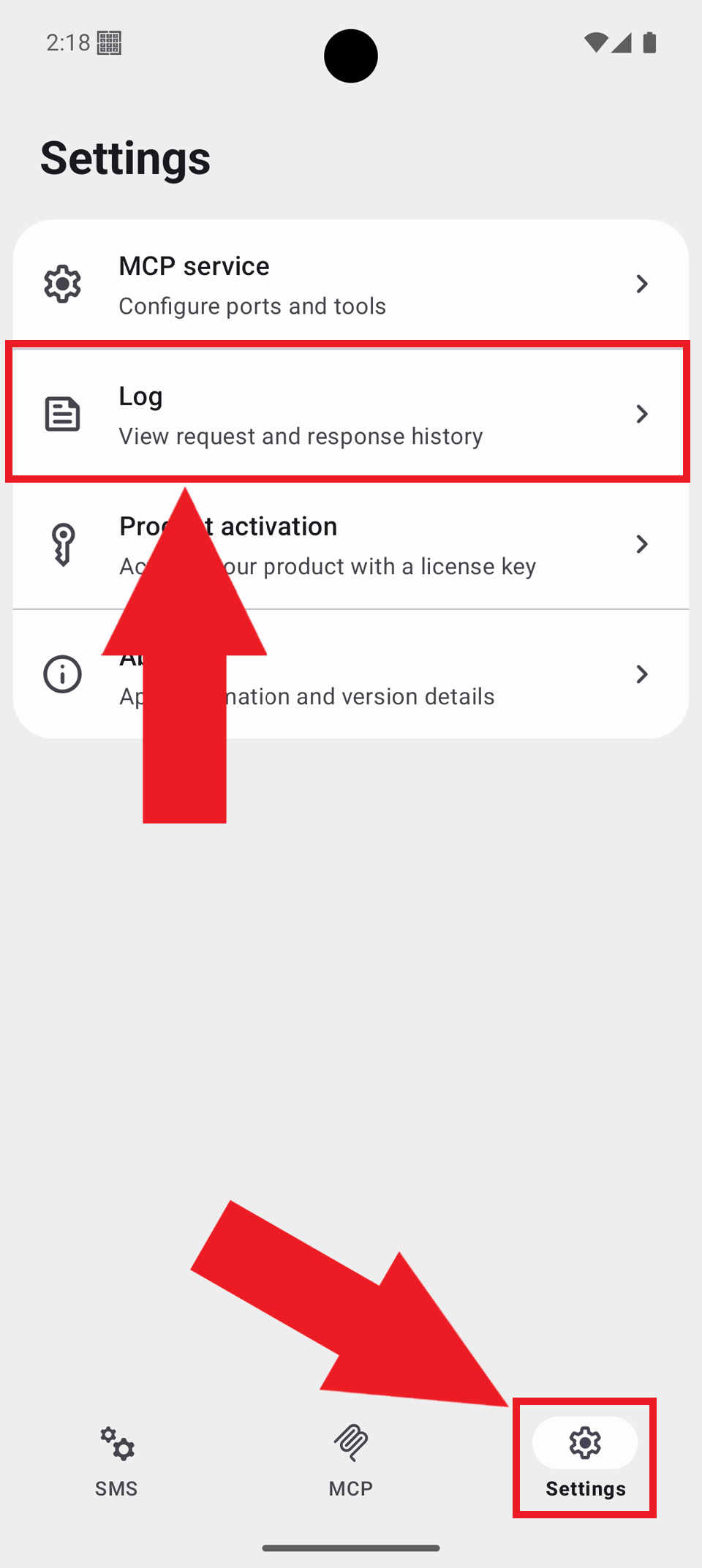
Open the Ozeki SMS Client app on your Android device and navigate to the Settings tab in the bottom navigation bar to access the application settings. Tap the Log option to view the request and response history (Figure 9).
Select the MCP tab to show only MCP-related activity. Here you will see the incoming tool call requests from OpenWebUI and the responses sent back, allowing you to confirm that the SMS was dispatched successfully (Figure 10).
Summary
You have successfully configured the Ozeki Android SMS Gateway MCP server with OpenWebUI. Your Android device is now acting as a local SMS gateway that it can communicate with over your local network, enabling text messages to be sent to any phone number using plain language prompts. All SMS traffic is routed through your Android device's mobile connection, with no cloud messaging API or third-party service required.